
Pizza Maker Kids Cooking Games
Piggy Panda IncRole Playing
4.6151.00 Reviews
- Version
- 3.2
- Installs
- 5.00M
- Age Rating
- Everyone
Screenshots






Our Review of Pizza Maker Kids Cooking Games
 Analysis by Appyee
I found Pizza Maker Kids Cooking Games easy to understand within seconds: prepare a pizza, choose toppings, and put it in the oven. That simple loop is exactly why it works well during a child’s first few sessions. There is no complicated role-playing system to learn, no long tutorial to decode, and no pressure to master a difficult control scheme. It feels more like a small digital kitchen activity than a traditional, story-heavy role-playing game.
After spending time with it, my opinion is positive but measured. The game is pleasant for short creative sessions, especially for children who enjoy pretending to cook or experimenting with different pizza combinations. However, its lasting value depends heavily on whether the player enjoys repeating the same basic routine. The first-week appeal is clear; the bigger question is whether that appeal survives once rolling dough and adding toppings stop feeling new.
What the first sessions feel like
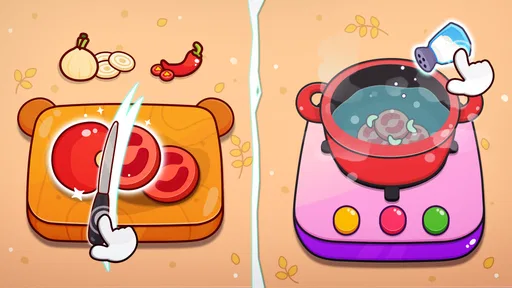
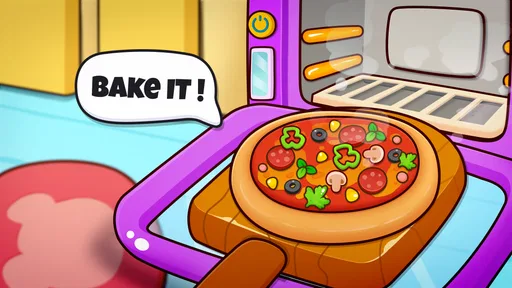
The central activity is deliberately familiar. I start with the dough, work through the preparation, select toppings, and finish by baking the pizza. That sequence gives the game a satisfying beginning, middle, and end without asking the player to manage a complicated restaurant or remember a large set of rules.
For a young player, this makes the game approachable. The actions resemble real cooking, but the consequences are much less stressful. A child can focus on choosing ingredients and seeing the pizza take shape rather than worrying about timing, money, customers, or a failed order. In my view, that makes it a good choice for a calm play period rather than an intense challenge.
The strongest early appeal comes from the feeling of control. The player is not simply watching an animation; the preparation process invites participation. Rolling the dough gives the opening step a tactile purpose, while topping selection creates room for personal choices. Even when the underlying activity is simple, that sense of making something personally chosen can keep the first sessions engaging.
I would particularly recommend trying it alongside a child who likes imaginative play. Asking what kind of pizza they are making, why certain toppings belong together, or what they would serve to a pretend customer can turn a short game into a small creative exercise. The game itself remains straightforward, but conversation adds variety without requiring extra systems inside the app.
The age rating is Everyone, and that matches the gentle presentation I experienced. It is designed for a broad audience rather than older players looking for complicated progression. Parents who want a low-pressure cooking-themed game will probably find the basic concept suitable, while children expecting action, exploration, or a deep adventure may lose interest quickly.
A useful rhythm for children
One practical strength is that a session can remain brief. A child does not need to commit to a long campaign before reaching a result. Making one pizza provides a natural stopping point, which is useful when the game is being used during a short break, before bedtime, or while waiting somewhere.
That short-session design also makes it easier for an adult to set boundaries. Instead of negotiating over an open-ended game, I can frame the activity around making one or two pizzas and then putting the device away. This does not make the game educational by itself, but it does make it easier to fit into a balanced routine.
My first concrete tip is to treat each pizza as a small creative prompt rather than rushing through the controls. Try a themed pizza, such as one based on colors or a pretend family meal, and let the child explain the choices. That approach extracts more value from the same preparation sequence than simply tapping through it as quickly as possible.
Where the novelty begins to weaken
After the initial excitement, the game’s limited core becomes more noticeable. The main pleasure still comes from preparing and baking a pizza, so players who need constant new goals may feel that the experience has reached its ceiling. I did not see enough complexity to make it a substitute for a deeper role-playing game, a management game, or a cooking title built around many different recipes and challenges.
This is the main trade-off. Simplicity keeps the game friendly, but simplicity also restricts long-term variety. A young child may happily repeat the process because the act of choosing toppings is enjoyable on its own. An older child, or anyone who prefers measurable progress, may ask what comes next once the basic routine is familiar.
That distinction matters when deciding whether it deserves permanent space on a phone or tablet. I would not install it expecting a game that grows substantially with the player. I would install it as a dependable, lightweight activity for occasional creative play. Those are different expectations, and the second one is much more likely to be satisfied.
The game belongs to the role-playing category, but its role-playing element is light. It lets the player act as a pizza maker rather than building a detailed character or navigating a large fictional world. Compared with a conventional role-playing game, it offers almost no strategic burden and far less narrative commitment. Compared with a typical cooking simulator, it is easier to enter but also less demanding.
That makes it a better alternative to a complex game when the goal is relaxed pretend play. It is not the better alternative when the child wants progression, competition, resource management, or a wide range of cooking tasks. I would choose this title for accessibility, not depth.
How I would use it in an everyday routine
Imagine a child coming home from school and needing a quiet activity while an adult prepares dinner. One short pizza-making session can fill that gap without requiring the child to understand a complicated menu or coordinate with other players. The adult can check in, ask about the topping choice, and then use the completed pizza as a natural stopping point.
In that situation, the game’s value is not endless replay. Its value is that it gives the child a focused task with a visible result. That is a modest benefit, but a real one. It can also work during travel or waiting time, provided the device is already available and the child is comfortable with the controls.
My second tip is to avoid presenting it as an unlimited distraction. Because the central loop is repetitive, a clear session limit protects the game from becoming tiring for both the child and the adult. One finished pizza can be the goal; leaving the game before boredom arrives makes it more likely that the child will enjoy returning later.
What keeps it useful from month to month
Recurring value comes from accessibility and familiarity rather than expanding content. A child can return after several days away and immediately remember what to do. There is no need to relearn a complicated control layout or recover a forgotten storyline. That makes the game reliable as an occasional activity.
For younger players, repetition is not automatically a weakness. Repeating a familiar sequence can help them become more confident with touch controls and decision-making. They can move from following an adult’s suggestions to choosing ingredients independently. The game’s simple structure leaves room for that gradual independence, even though it does not offer a sophisticated progression system.
Still, I would not expect the same level of interest every month. The game’s staying power depends on the child’s own relationship with pretend cooking. If that interest is strong, the pizza theme can remain inviting. If the child is motivated mainly by unlocks, surprises, or increasingly difficult tasks, the experience may fade much sooner.
The developer is Piggy Panda Inc, and the game has reached over five million installs with an average rating of 4.6 from around 9,600 ratings. Those figures suggest that the uncomplicated format has found a substantial audience, but they do not change my central conclusion: popularity does not turn a short-form activity into a deep long-term game.
The current version is 3.1, and the game runs on Android 8.0 or later. For someone deciding whether to keep it installed, compatibility is straightforward if the device meets that requirement. I would still review the available storage and the child’s overall app collection before keeping it indefinitely, because a simple game should earn its place through actual use rather than merely remaining forgotten on the home screen.
When repetition becomes the main problem
The most likely source of fatigue is not difficulty. It is sameness. Rolling dough, adding toppings, and baking are enjoyable when the player is making fresh choices, but the sequence can feel mechanical once those choices no longer feel meaningful. Children who ask for new locations, characters, recipes, or objectives may quickly outgrow the experience.
There is also a difference between creative freedom and unlimited variety. Choosing toppings can make each pizza feel personal, but the preparation framework remains familiar. If a player wants a game that constantly changes the challenge, this one may feel too narrow. I would pay attention to the child’s behavior after several sessions: are they inventing new stories around the pizza, or simply repeating the taps without interest?
That observation is more useful than judging the game after one enthusiastic session. Early excitement can come from the novelty of touching every step. Long-term enjoyment comes from finding new reasons to repeat the activity. If those reasons are not appearing naturally, there is no need to force continued use.
Maintenance, purchases, and family expectations
Because the game is free to download, it is easy to try without making an upfront commitment. The listed in-app purchases range from $1.99 to $59.99 per item, so I would involve an adult in any purchase decision and avoid assuming that every part of the experience should be treated as cost-free. A free entry point is convenient, but it does not remove the need to check the purchase flow before handing the device to a child.
This is where maintenance becomes part of the review. Parents should not only ask whether the child enjoys the game; they should also decide whether the app fits the household’s rules for purchases and screen time. If the device is shared, a quick check of the game’s purchase settings and the child’s access is sensible. I would also revisit the game after a few weeks instead of leaving it installed automatically.
My third tip is to make the first play session supervised, even though the content rating is Everyone. Supervision is less about the cooking theme and more about learning how the child interacts with the game, whether the controls feel comfortable, and whether the available purchase options fit the family’s expectations. That one check can prevent small frustrations later.
For children who use older devices, the Android 8.0 minimum is another practical point. A compatible operating system is required, and a parent should test the game on the intended device before promising it as an activity. A game that is simple to play can still be inconvenient if the screen is too small, the device is shared, or the child cannot comfortably perform the preparation steps.
I would also keep expectations clear about what the game is not. It is not a complete cooking course, a realistic kitchen simulator, or a long-form role-playing adventure. It can encourage pretend play and simple choices, but I would not use it as a replacement for real cooking activities when the child is old enough to help safely in the kitchen.
Who should keep it installed
I think it earns a place on the device of a younger child who enjoys food themes, likes making choices, and benefits from short, self-contained activities. It is also a reasonable shared game for an adult and child to play together, especially when the adult adds conversation and imagination rather than expecting the app to provide all the entertainment.
It is less suitable for a player who needs a strong sense of advancement. Someone looking for character development, a broad story, difficult decisions, or a large variety of missions will probably be happier with a more substantial role-playing game. A child who already loses interest in repeated pretend-play routines may also find that the pizza theme wears thin quickly.
Compared with a physical cooking activity, the game is cleaner, faster, and easier to supervise, but it lacks the sensory experience of real ingredients. Compared with a deeper digital cooking game, it is more approachable and less demanding, but it offers fewer reasons to return. Those comparisons explain its proper role: a small, accessible activity rather than the main game on a device.
My long-term verdict
I enjoyed the first-week experience because the game gets to its idea quickly and makes the player feel involved. The dough, toppings, and oven create a clear routine that a child can understand without help. For short sessions, that clarity is a genuine strength, and the Everyone rating fits its broad, family-friendly positioning.
After the novelty fades, my recommendation becomes more selective. The game can retain value when a child supplies their own stories and themes, but it does not appear designed to provide endless new challenges. Its lasting space depends on habit: occasional play, a defined stopping point, and an interest in making different pretend pizzas rather than chasing constant progression.
For me, the best reason to keep it installed is convenience. It is free to start, simple to revisit, and suitable for a quick creative break on a compatible Android device. The main reason to remove it would be predictable repetition, especially if the child has stopped making choices and is only tapping through the routine.
My final recommendation is to try it as a short-session pizza activity, not as a deep role-playing commitment. If your child enjoys imaginative cooking, it can be a pleasant addition that returns value in small doses. If you want a game with substantial progression, changing objectives, or months of fresh content, I would look elsewhere. The title succeeds when its modest scope matches your expectations; it disappoints only when its simple recipe is asked to deliver a full meal.
Privacy and Permissions
See what permissions an app requests and how it handles your data.
- Photos/Media/Files
- read the contents of your USB storage, modify or delete the contents of your USB storage
- Storage
- read the contents of your USB storage, modify or delete the contents of your USB storage
- Other
- view network connections, full network access, prevent device from sleeping, Google Play license check
Verdict
Strengths of Pizza Maker Kids Cooking Games
- Simple controls make it easy for young children to play independently.
- Creative toppings and decorations encourage imaginative food designs.
- Bright graphics and playful animations are appealing to kids.
- Short cooking activities suit quick play sessions.
- Offline access makes it convenient for travel or limited connectivity.
Limitations of Pizza Maker Kids Cooking Games
- Repeated cooking steps may become predictable after extended play.
- Some features or ingredients may require in-app purchases.
- Ads can interrupt gameplay depending on the device and version.
- Limited challenge may not satisfy older children or experienced players.
- The game may collect usage data, depending on its privacy settings.
Other Releases by Piggy Panda Inc
View All
Car Makeover: ASMR Games
Role Playing4.3

Cake Maker: Kids Cooking Games
Role Playing4.3

Kids Coloring Pages For Boys
Educational4.6

ABC Games: Tracing & phonics
Educational4.4
Similar Picks in This Category
View All
Hair Dye
CrazyLabs LTD4.4

Monster High™ Beauty Salon
CrazyLabs LTD4.5

Bus Simulator - Bus Games 3D
Jima Apps4.4

Flight Pilot: 3D Simulator
Wildlife Studios4.1


Super Stylist Fashion Makeover
CrazyLabs LTD4.4
Frequently Asked Questions
What is Pizza Maker Kids Cooking Games?
Pizza Maker Kids Cooking Games is a child-friendly cooking game where players prepare pizzas through a series of simple, interactive steps. Children can choose ingredients, shape the dough, add sauce and toppings, bake the pizza, and decorate or serve the final creation. Its colorful presentation and straightforward controls are designed to make virtual cooking enjoyable for younger players.
Is Pizza Maker Kids Cooking Games suitable for young children?
The game is generally designed with children in mind, using bright visuals, simple touch controls, and easy-to-follow cooking activities. Younger players may be able to enjoy the main features with limited assistance, although parents should still check the recommended age rating on the Google Play Store or App Store. Reading ability, patience, and familiarity with mobile devices can affect how independently a child plays.
Does the game require an internet connection to play?
Many of the basic pizza-making activities may be available without a constant internet connection once the game has been installed, which can be useful during travel or in areas with limited connectivity. However, certain features may depend on internet access, including advertisements, purchases, updates, analytics, or additional content. It is best to test the game in offline mode before giving it to a child.
Are there advertisements or in-app purchases in Pizza Maker Kids Cooking Games?
The availability of advertisements and in-app purchases can vary depending on the version, platform, and developer settings. Some free children’s cooking games display ads or offer optional items, recipes, decorations, or upgrades for purchase. Parents should review the store listing and the game’s settings before downloading, then enable parental controls or purchase restrictions to help prevent accidental spending.
What can children learn or practice while playing?
Pizza Maker Kids Cooking Games is primarily intended for entertainment, but it can also encourage creativity, decision-making, and basic sequencing skills. Players follow steps in order, select ingredients, experiment with combinations, and observe how preparation leads to a finished meal. It should not be treated as a replacement for real kitchen supervision or cooking instruction, but it can introduce children to food preparation in a safe virtual environment.
Play our best games!


